A Visit to the American Antiquarian Society

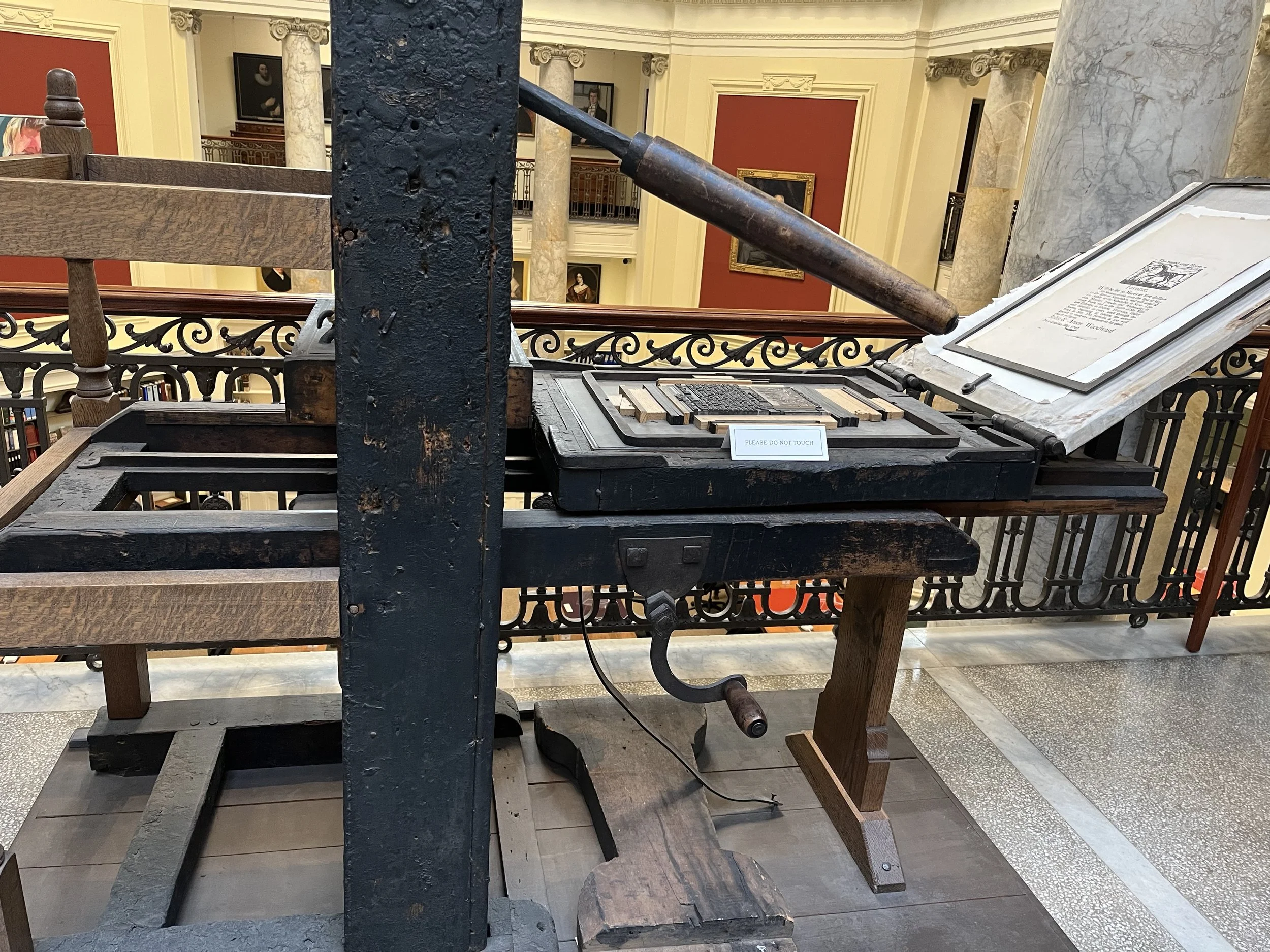
Replica of “first thing ever printed in Worcester.”

Recently author Caroline Linden & I paid a visit to the American Antiquarian Society. I’m one lucky Nerdy History Girl: It’s only a short drive from my house.

The place is like the Tardis: bigger on the inside, although it’s pretty big on the outside, too—which it needs to be, since it’s the home of “the world’s largest and most accessible collection of books, pamphlets, broadsides, newspapers, periodicals, children's literature, music, and graphic arts material printed before the twentieth century in what is now the United States.” Four million items or so. One cannot see everything in a 45 minute tour, nor can one take photos of everything without holding up progress, but here’s a sampling of what we saw.
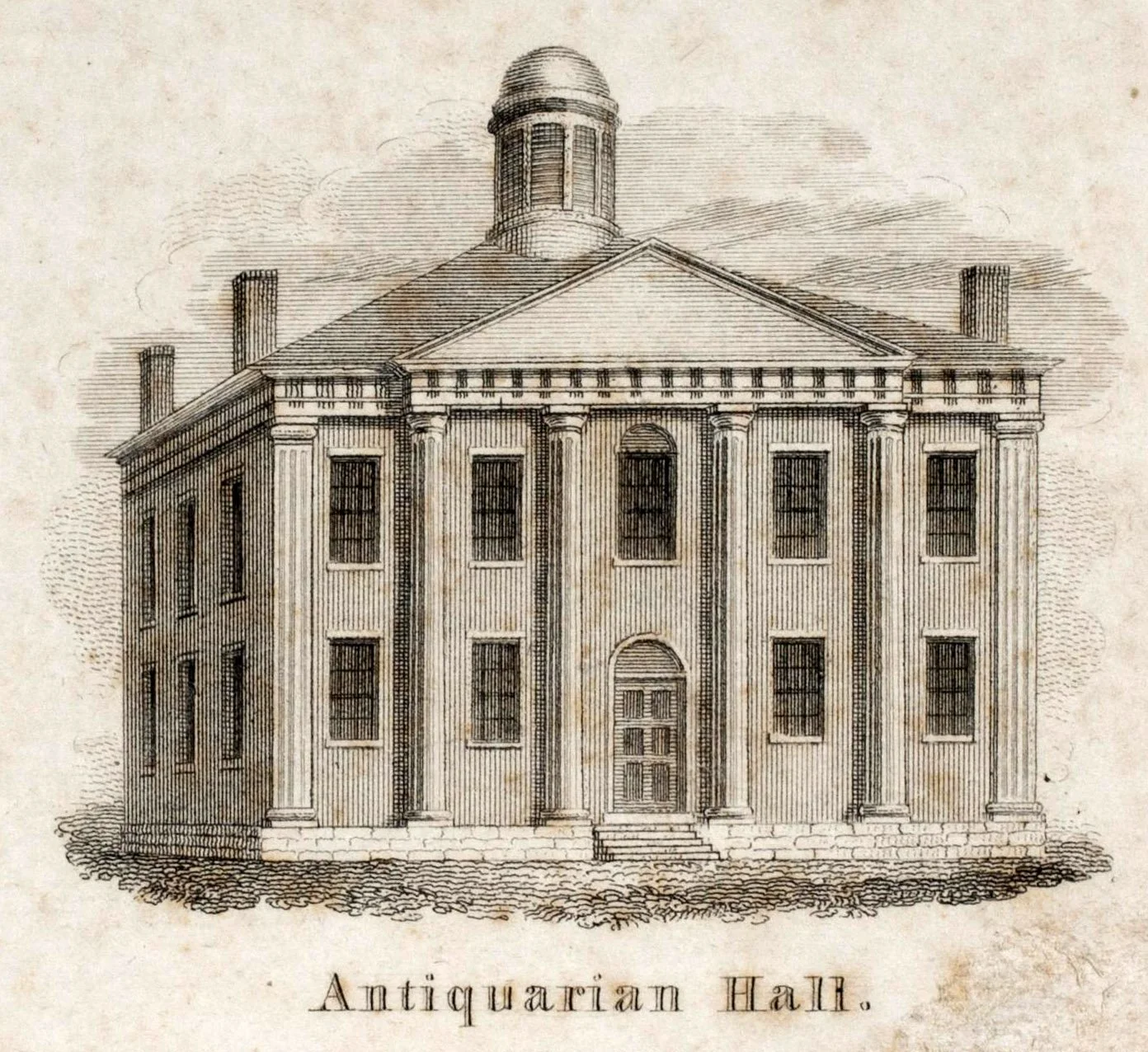
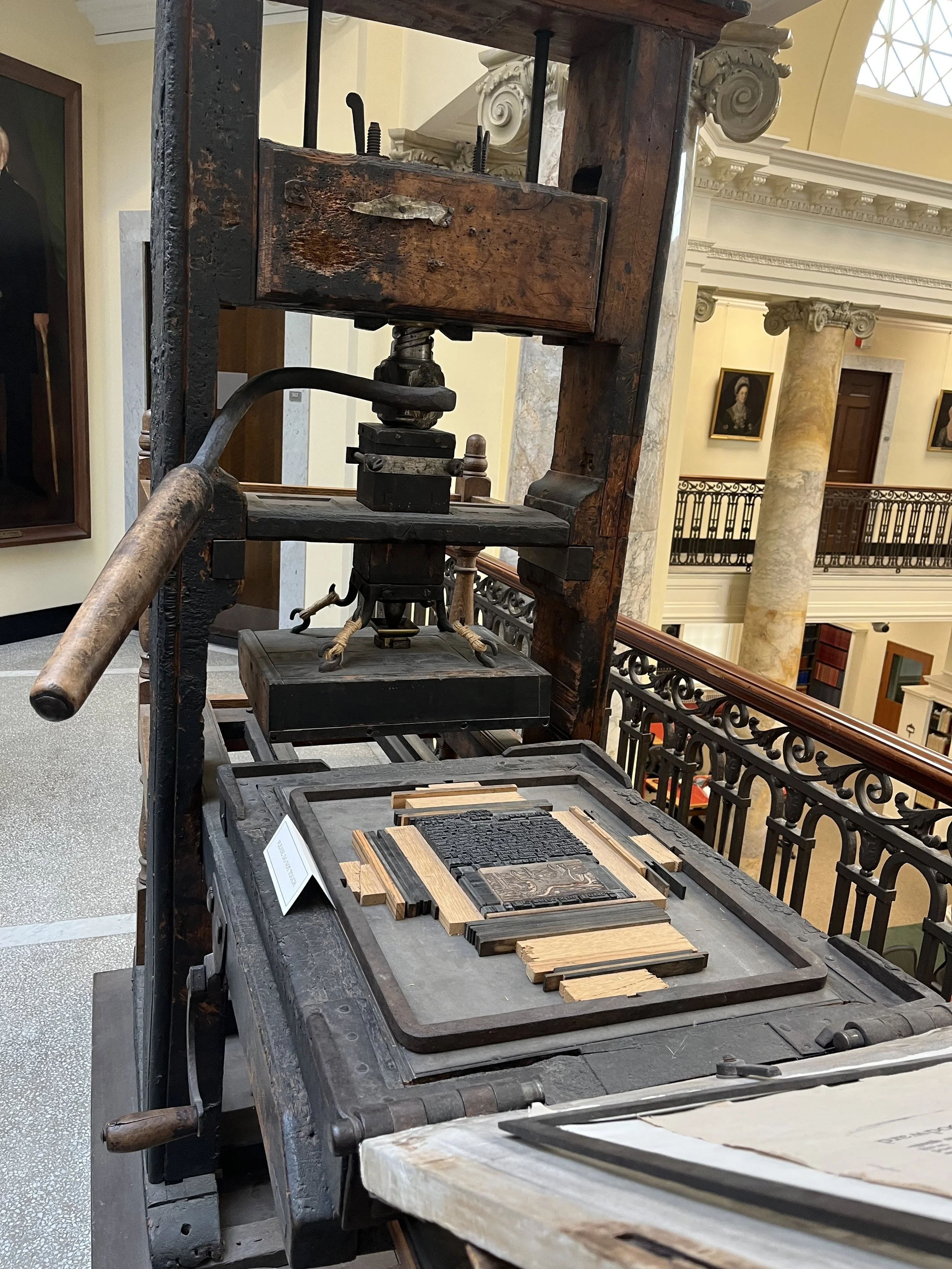
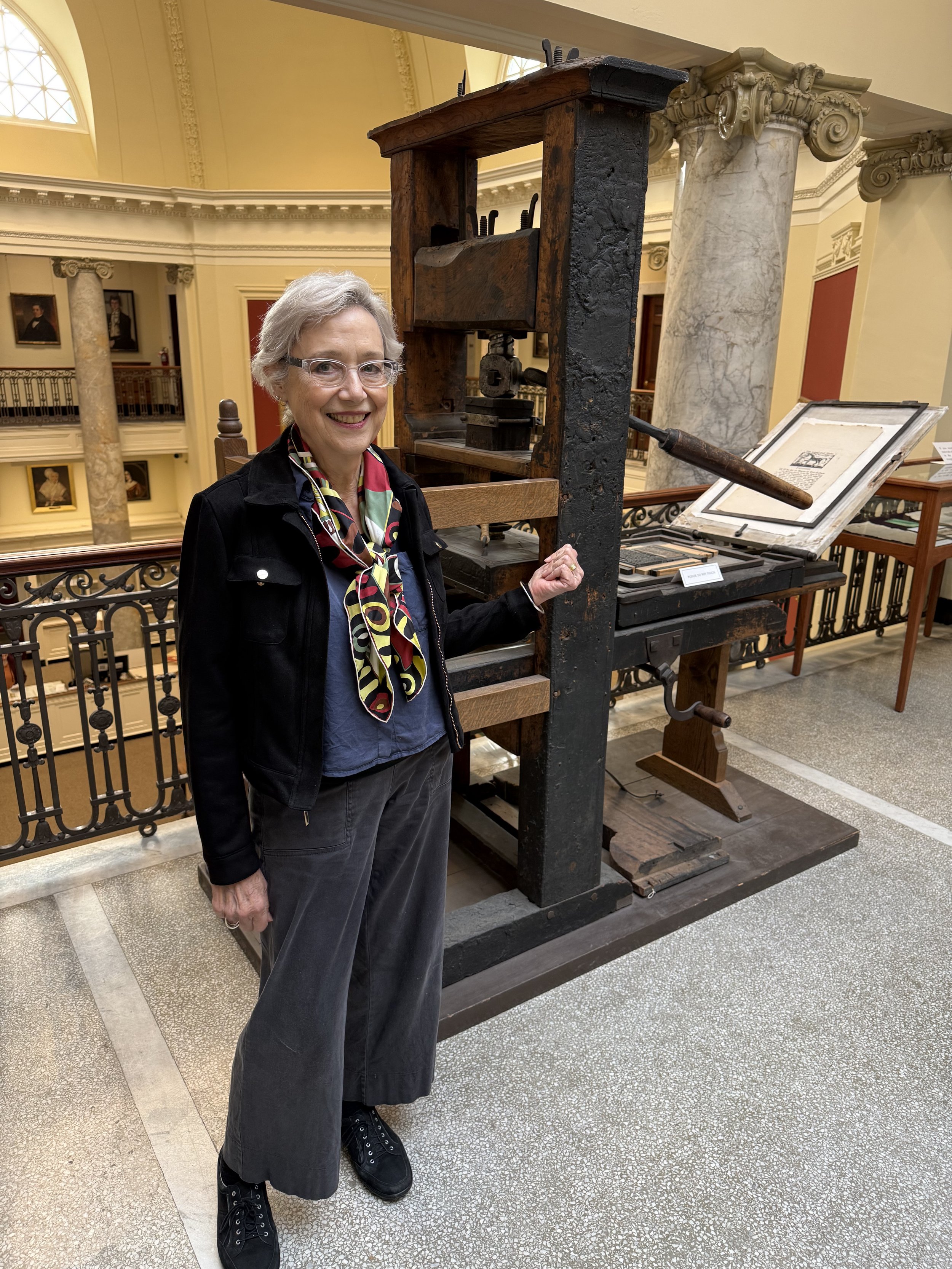
The first image, from the website, is Antiquarian Hall in 1812. The rest are our photographs (mainly my husband’s). The printing press is the original press on which Isaiah Thomas produced The Massachusetts Spy. He started out in Boston, but made a hasty exit, press and all, when things in Boston got too hot for this revolutionary. You can read the story here.

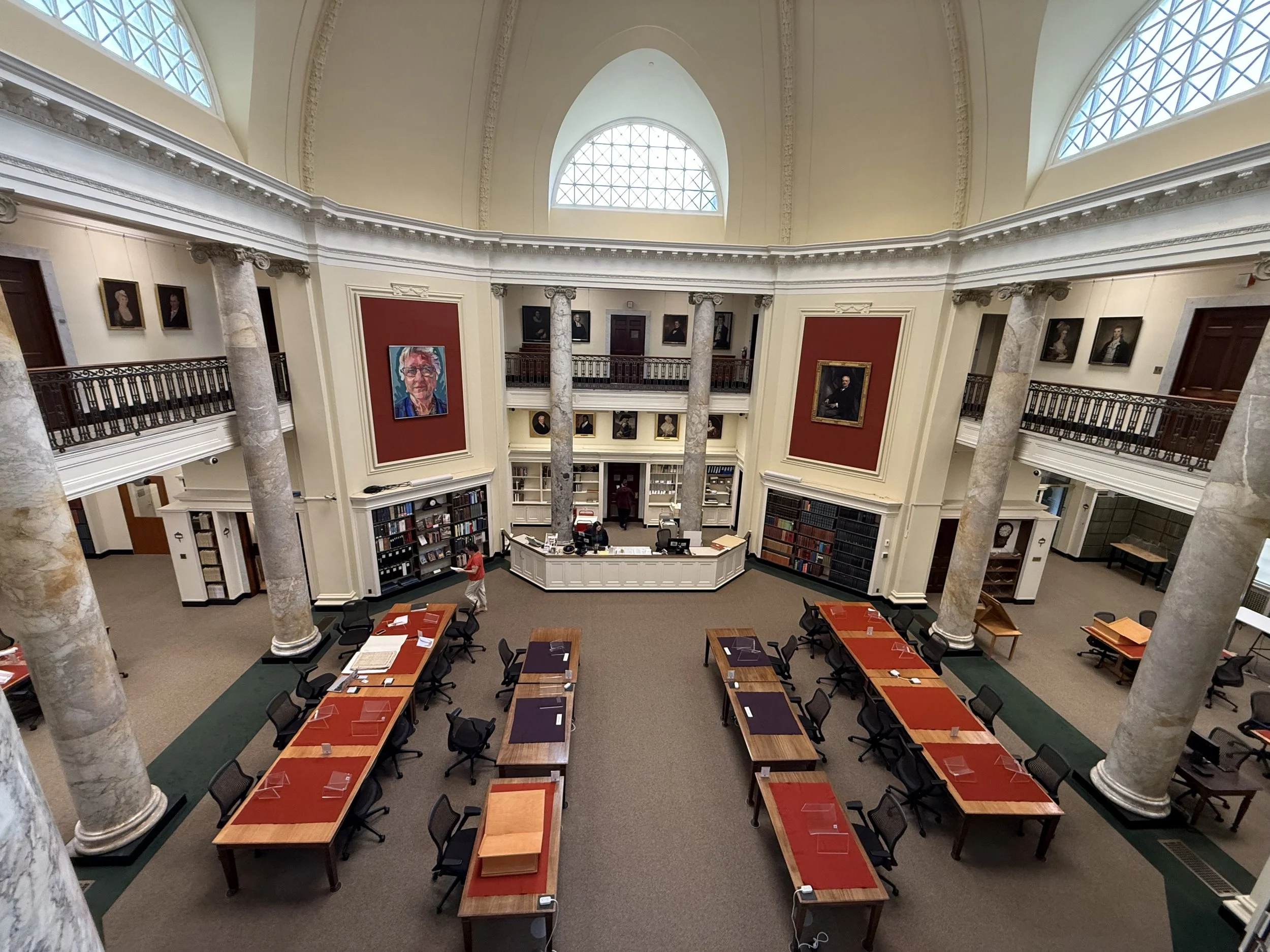
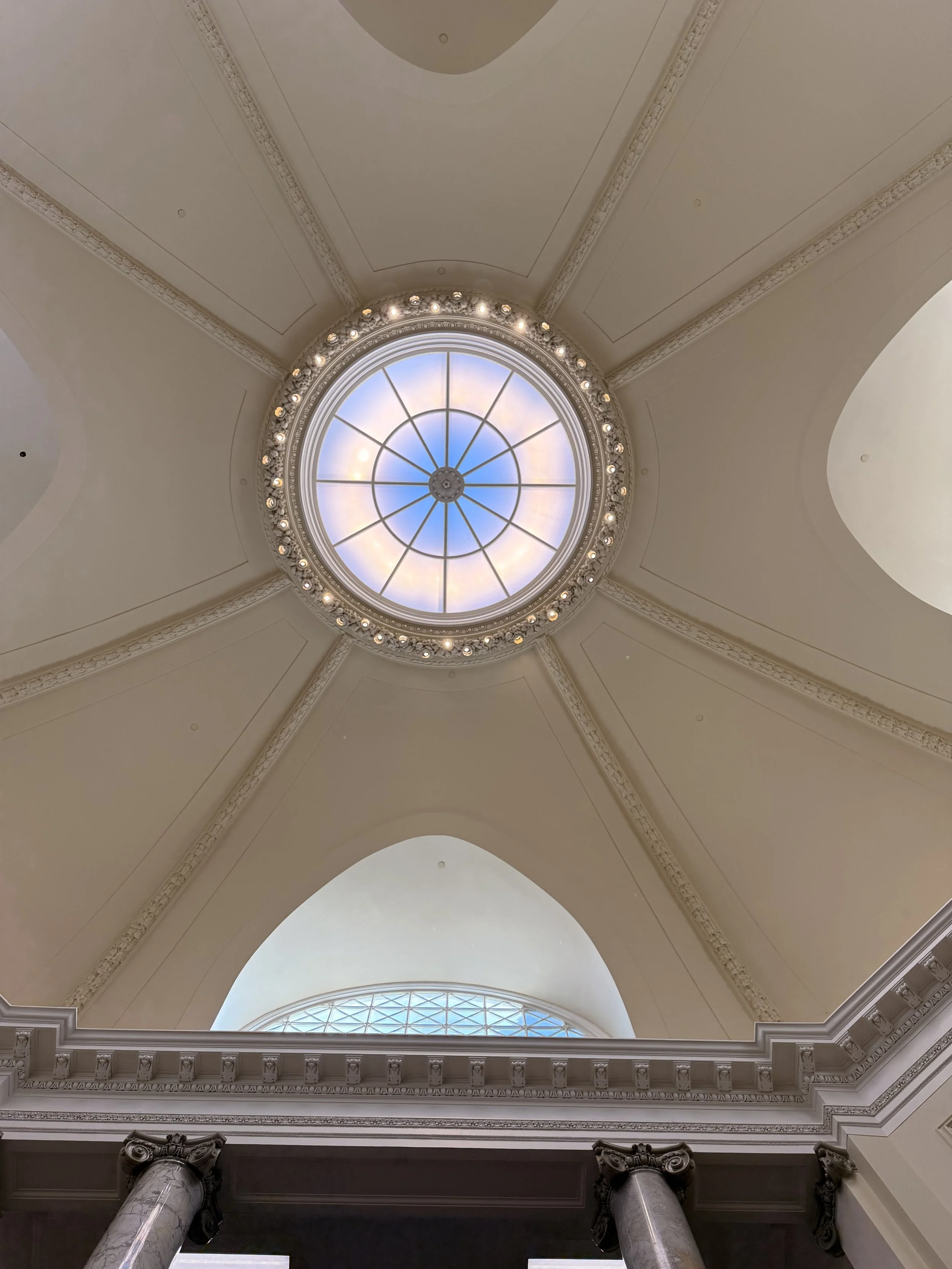
The large space is the Reading Room, and the light is in the dome.

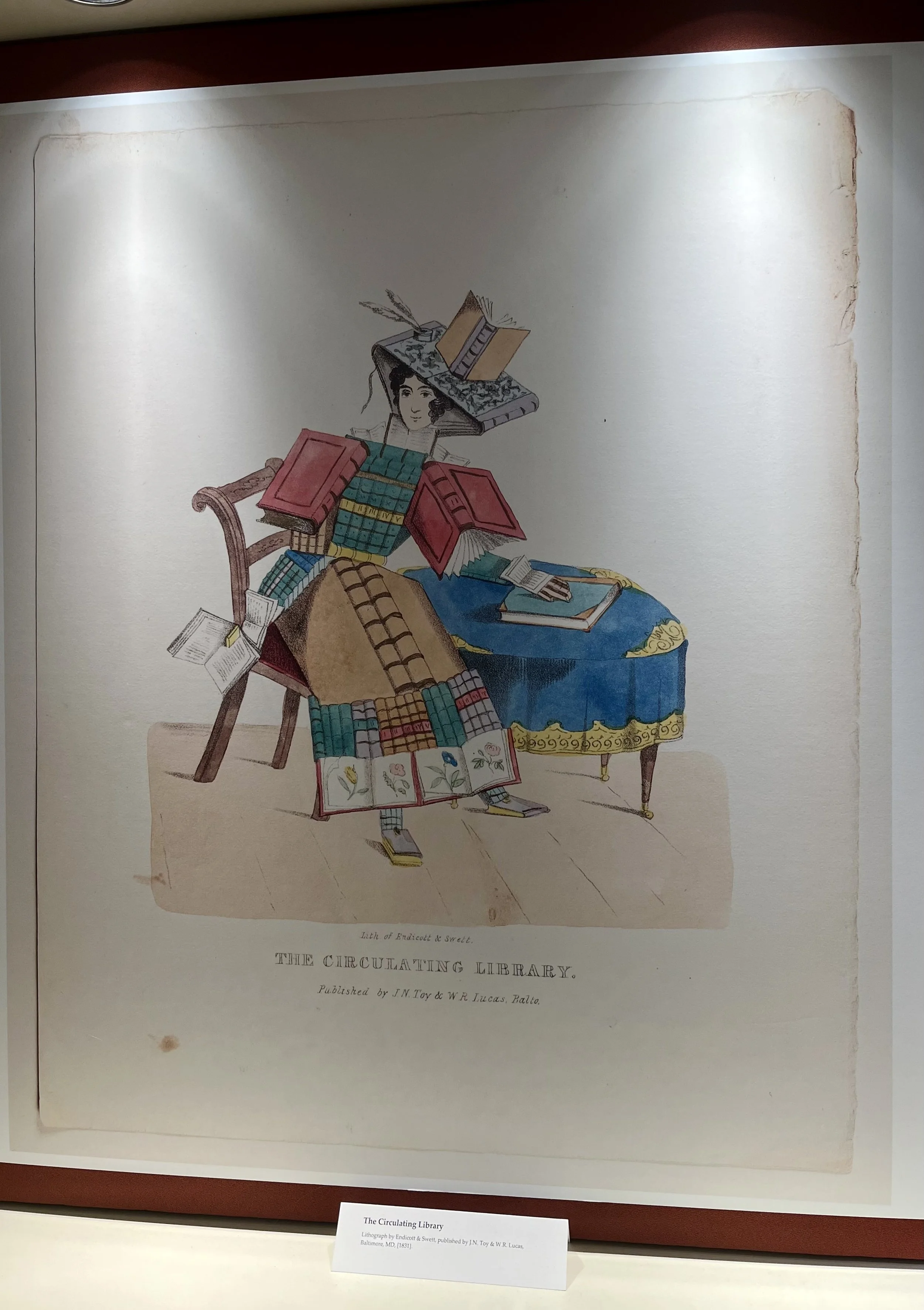
The print, “The Circulating Library,” is one you may have seen before in one of my posts, either here or on social media. It was one of several enlarged images from the collection that hang in the Introductory Gallery (the images change periodically).

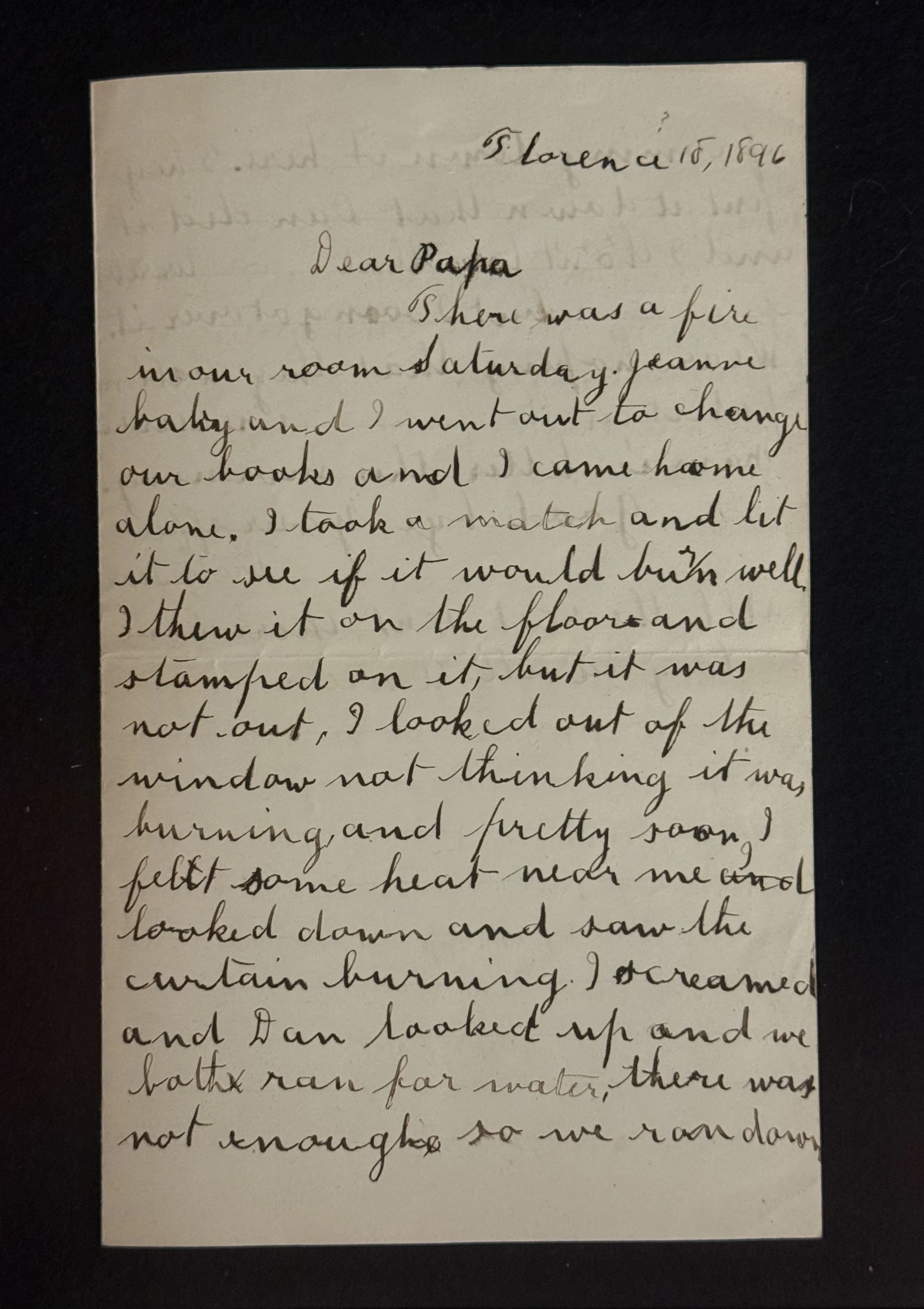
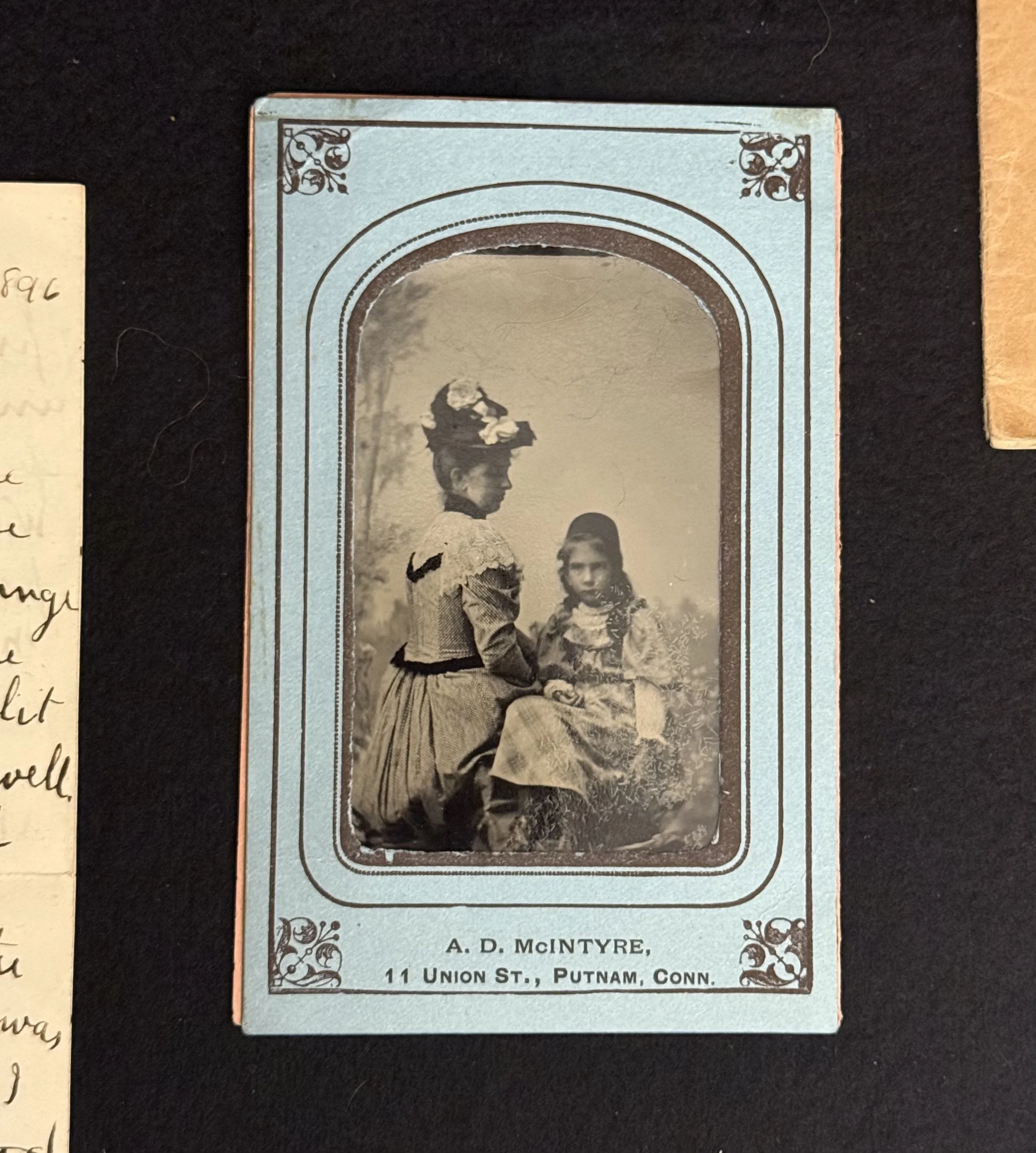
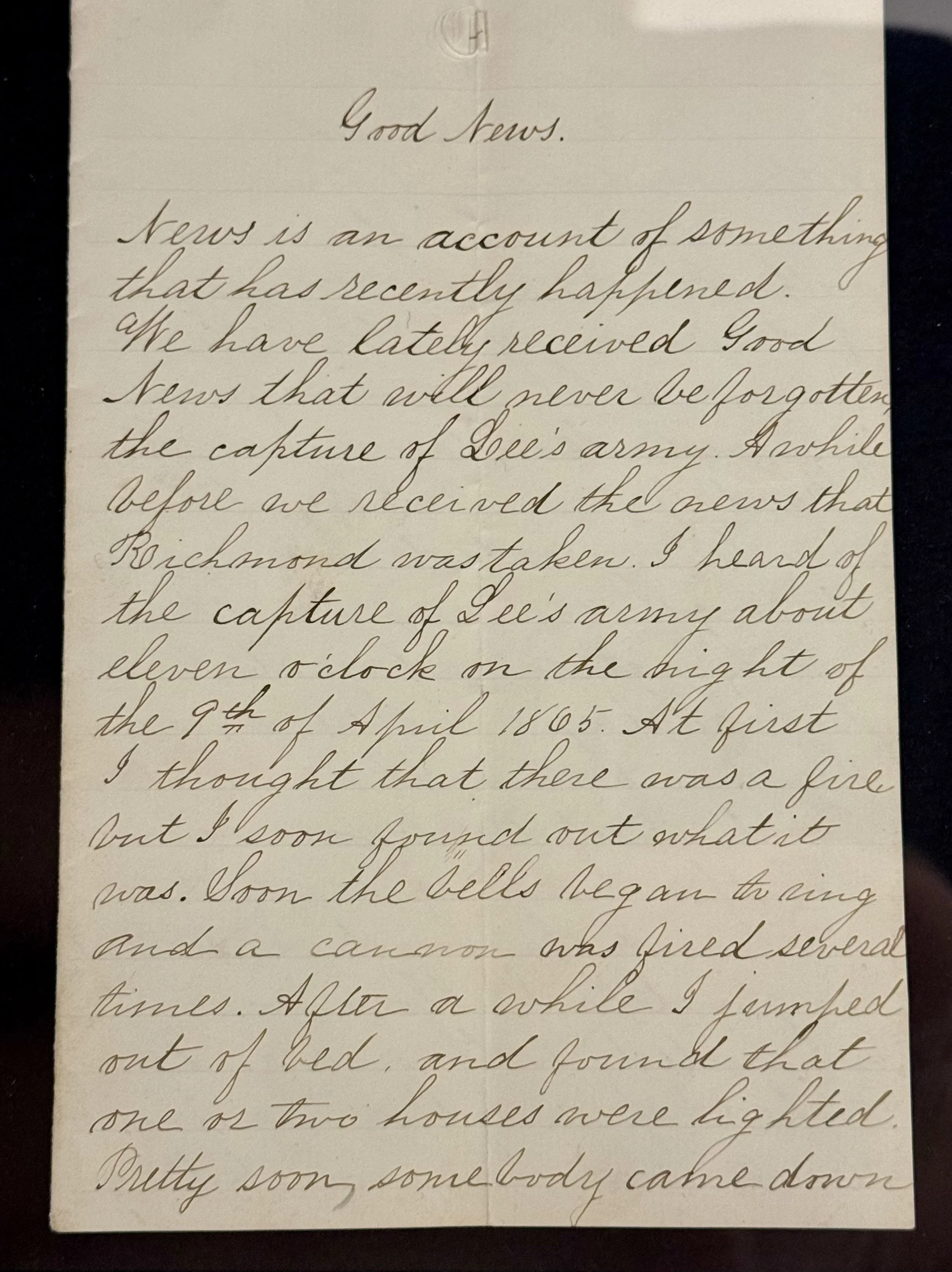
We saw a number of letters, but there wasn’t time to photograph all of them and their transcriptions. I chose these two because the subject matter was interesting: In one case, the writer has accidentally started a fire; the other reports the defeat of Lee’s army.

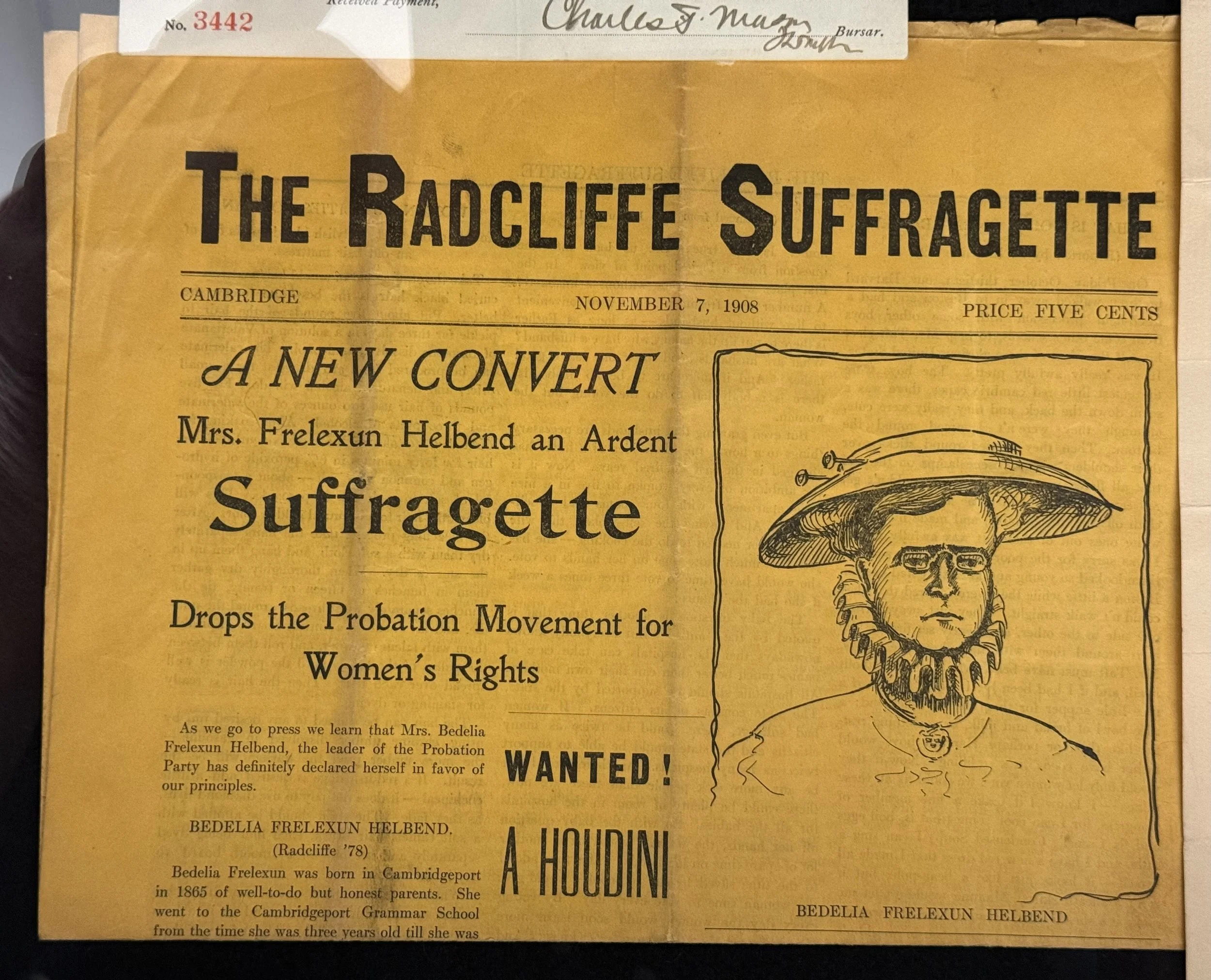
“The Radcliffe Suffragette” is a supposedly hilarious satire of the women’s suffrage movement.

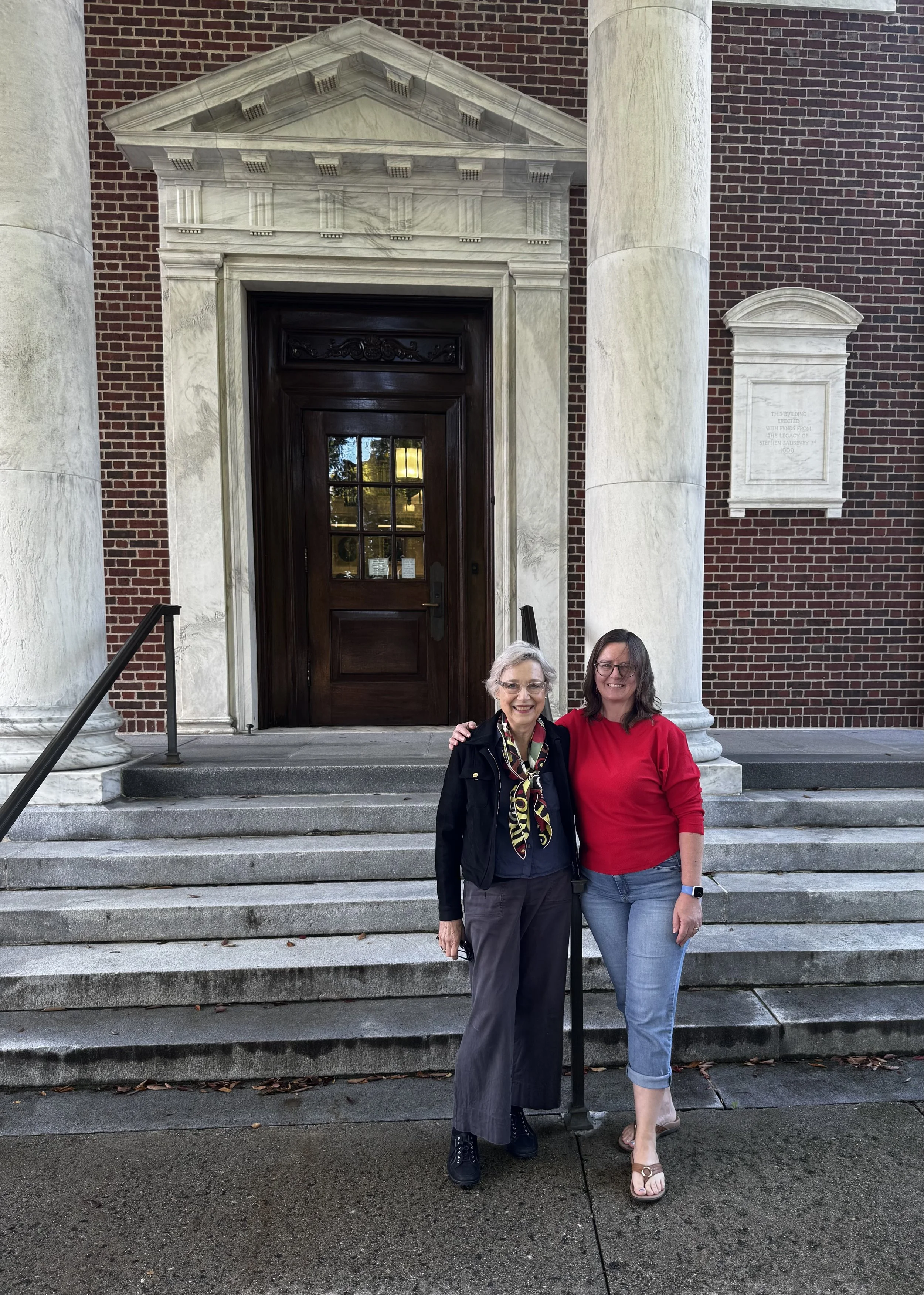
And, finally, the two authors at the front of the AAS.

The AAS offers free tours on Wednesdays at 3PM. Along with seeing the sorts of things we were able to photograph, you get to go behind the scenes, into the stacks, conservation area, and other parts of the AAS’s inner workings. Well worth a visit if you’re in the area. If you’re not, the website is a treat, with vast quantities of material online.
The Two Nerdy History Girls & the World of 1776—Now On YouTube

Clockwise from upper left: Loretta Chase, Meena Jain, Susan Holloway Scott

As always, Susan Holloway Scott and I had a wonderful time with Ashland (MA) Public Library Director Meena Jain. This time, the Two Nerdy History Girls did something a little bit different: We focused on Revolutionary War era America—and along the way, did some compare & contrast work with several topics. As you probably are well aware, everyday life in America, before as well as after the revolution, was different from life in England in many ways.

Susan has written several works of historical fiction focusing directly on Americans during the Revolutionary War era, whereas my focus has been early nineteenth-century England. Still, I’ve learned some things from my visits to Colonial Williamsburg, and this, I hope, helped me keep up with the questions.

For those who missed the conversation, or who’d like a rerun, here’s the YouTube link.

The hour went by quickly. Since some of the information might have slipped by the audience, and since I have (of course) more historical nerdy-ness to offer, below are some of the books mentioned as well as links to additional information.

Here are some of the 2NHG posts on pins:

Pins & Pinning

As Used by Jane Austen: Pins, the Regency Post-It

A Young Woman Dresses for Day, c. 1775

Colonial Williamsburg offers many videos about life in 1700s America.

If you want to learn more about Colonial fashion, a number of videos show how clothing was made and how people dressed.

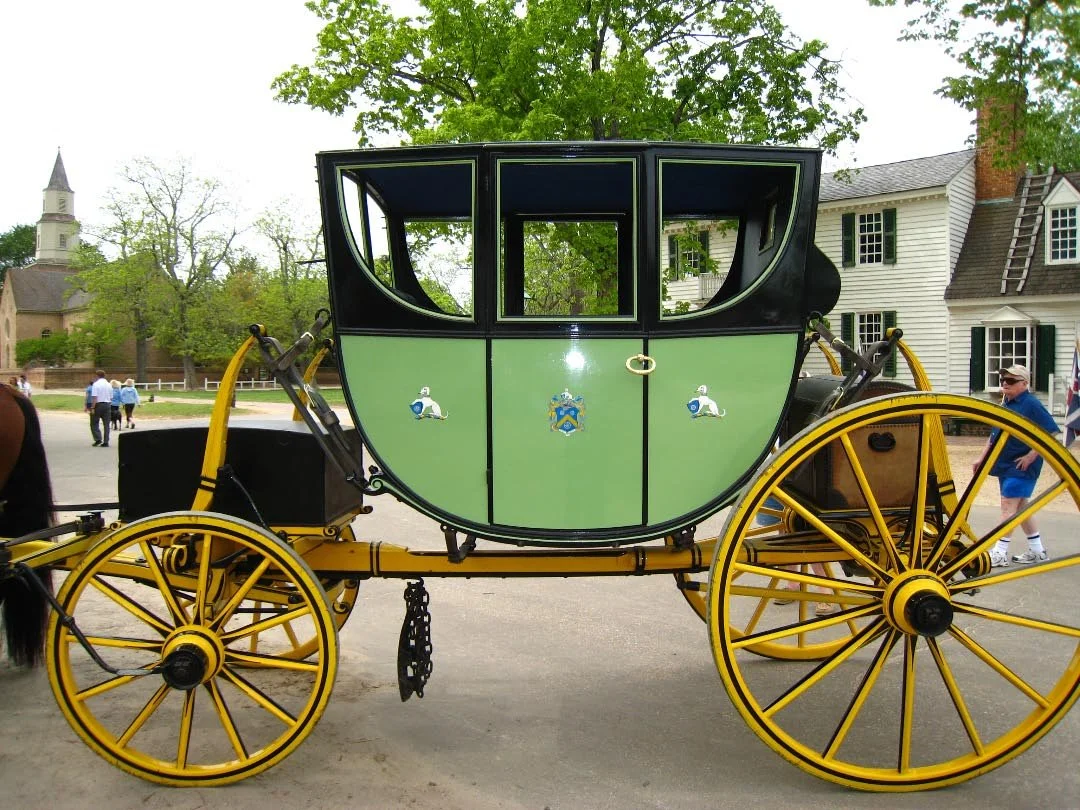
Coach at Colonial Williamsburg

When we discussed transportation, I referred to an early 19th century book, The Traveller’s Oracle (2 volumes), which covers, apparently, every detail of traveling in England in the 1820s. By this time, England had vastly improved its roads, with a corresponding increase in inns, but the basic principles would apply to most people traveling via horse or carriage.

Celebrating the Rocket Man, Robert Hutchings Goddard

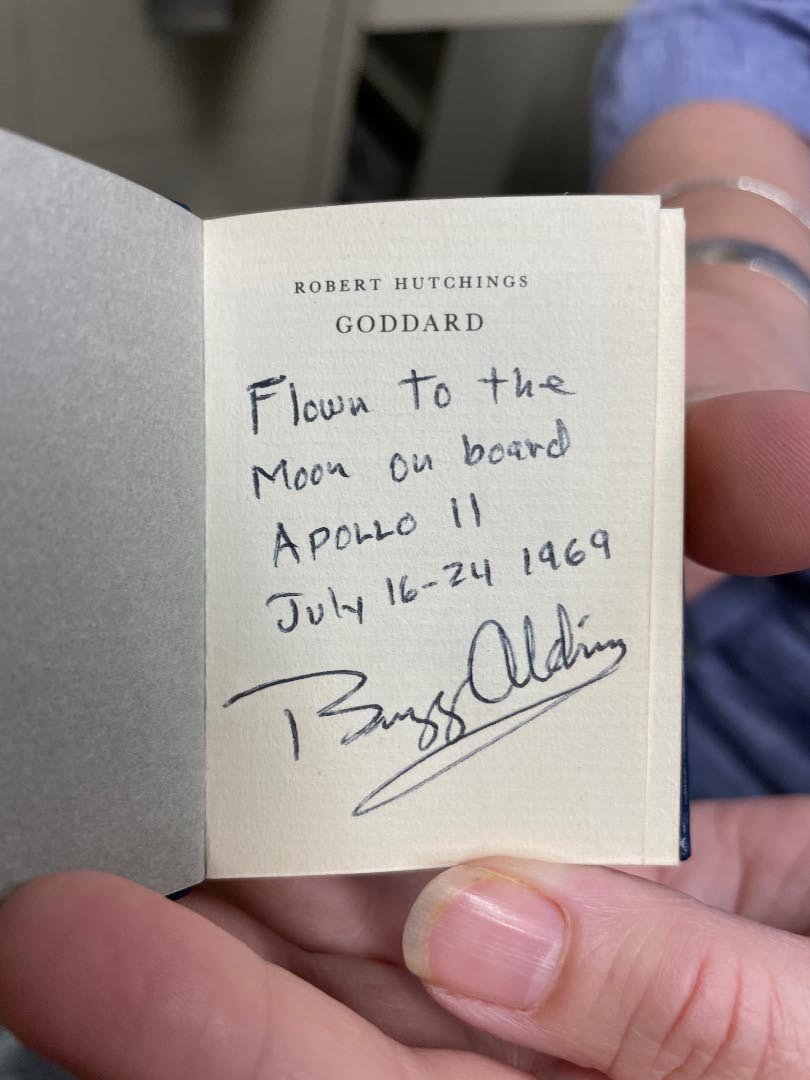
Title page from Robert Goddard Biography, with note "Flown to the Moon on board APOLLO 11 July 16-24 1969, signed by Buzz Aldrin

Miniature Robert Goddard biography that went to the moon with Buzz Aldrin

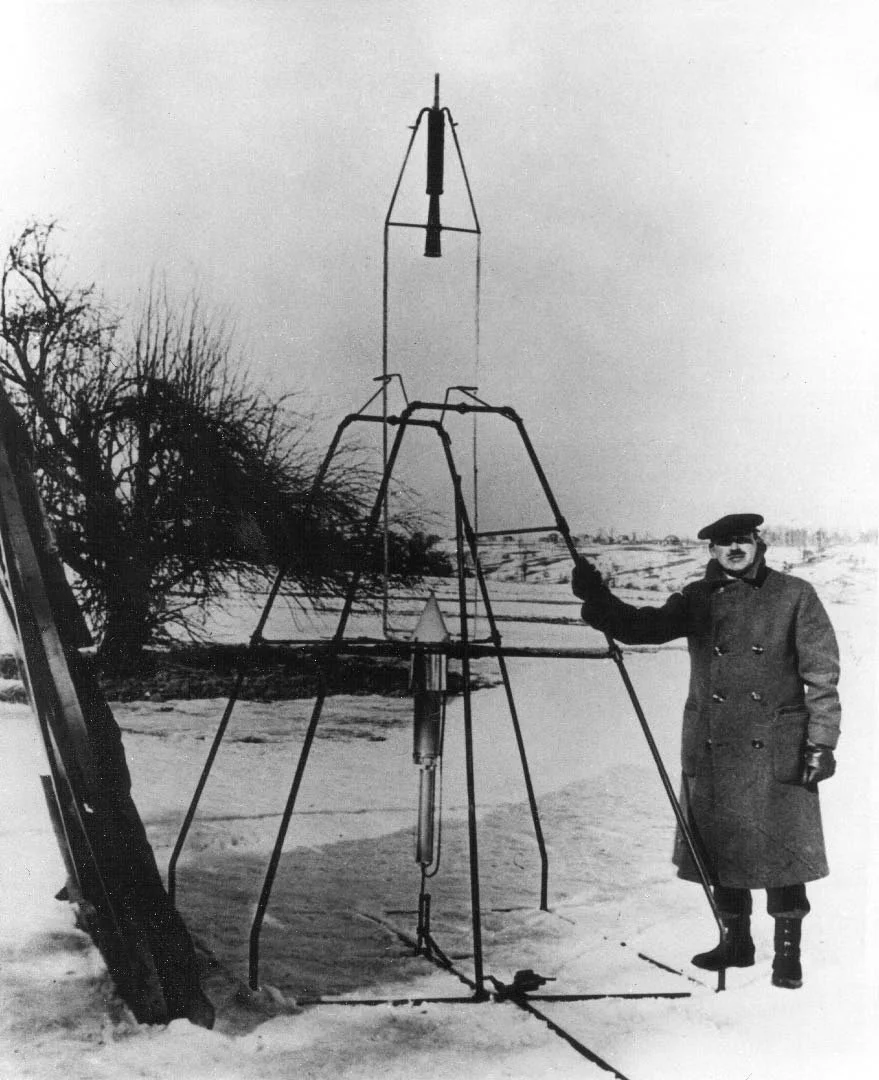
On 16 March 1926, Dr. Robert Hutchings Goddard launched a rocket from his aunt’s farm (now a golf course) in a town a few miles from where I live.

The rocket did not go far in terms of physical distance. It shot up forty-one feet into the air and landed one hundred eighty-four feet away, having traveled for two and a half seconds.

That short flight changed everything.

In July 1969, the little book pictured above, a biography of Goddard, was the first book to travel to the moon. Astronaut Buzz Aldrin took it there.*

Artemis II, the first crewed flyby mission to the Moon in more than 50 years, is expected to launch in a few weeks, if all goes well.

In short, that brief flight started us on the path to the moon and beyond. It showed what was possible and led to more than space travel. But I’m not going to tell a story that others have covered. You’ll find abundant links, with wonderful images, online, that are part of the Goddard Centennial celebration. The images exist thanks to Goddard’s wife, Esther. She documented all he did and kept his memory alive. During Women’s History Month, of course it makes sense to recognize Esther Goddard. You can see many of Esther’s images online.

The Goddard Library is offering several exhibitions and two lectures. The latter will be available to view online, as well. On 17 March at 7PM, John Emond, former NASA program manager offers, “Robert Goddard: A Vision. A Reality. A Hope.” On 19 March at 4PM, Kevin Schindler, co-author of Robert Goddard's Massachusetts, offers “The Dreamer Who Launched the Space Age.”

You can learn more about Clark University’s Goddard Centennial events here.

Robert H. Goddard and a liquid oxygen-gasoline rocket

Dr. Robert H. Goddard and a liquid oxygen-gasoline rocket at Auburn, Massachusetts.

If you’re in the Central Massachusetts area between now and 1 August, you can also visit the Museum of Worcester’s Goddard exhibition, “Worcester to the Stars: The Goddard Rocket Centennial.” If you’re around between now and early April, you might want to catch “The Rocket Man: The Robert Goddard Musical.”

More about Goddard celebrations here.

I’ll finish by pointing out that this celebration, which has gone nationwide, very likely would not have happened if not for my indefatigable friend, fellow alum, and former colleague at Clark, Charles Slatkin.

*A couple of years ago, I saw the little book up close and personal at the Robert Hutchings Goddard Library. This is a building with which I’m familiar, having studied there as an undergraduate and post-graduate student as well as having done research some years later for my historical romances.

Photo credit for miniature Goddard bio, Walter M. Henritze; Goddard and rocket image courtesy NASA via Wikipedia.