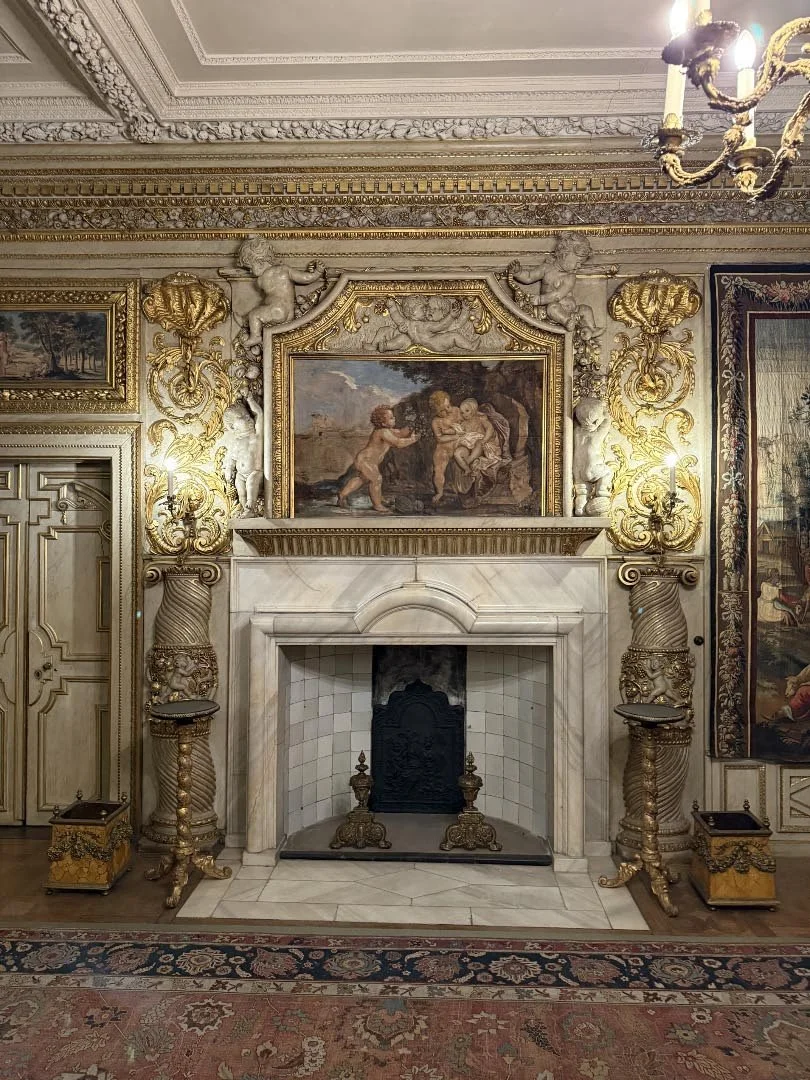
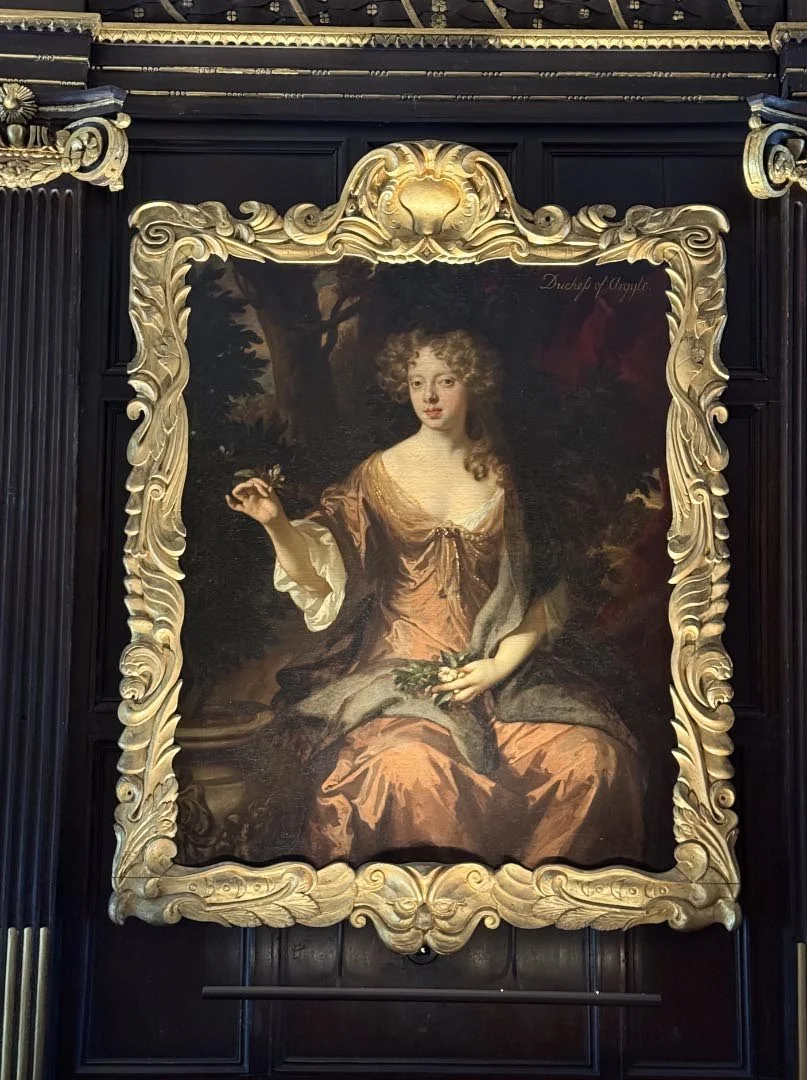
Ham House, Richmond, was a revelation. I’ve often used 16th and 17th century houses for my characters. Sutton Place in Surrey became Camberley Place in all three books of the Difficult Dukes series. Northumberland House became Clevedon House in Silk is for Seduction. Holland House became Castle de Grey in “Lord Lovedon’s Duel” and My Inconvenient Duke.
I’m drawn to these houses because they tend to be complicated. They’re built around courtyards; they have great halls and long galleries and they’re loaded with nooks and crannies where my characters might steal a private moment or two. Over the years, they acquire accretions, and they tend to sprawl over vast acres.
But many of the houses I used in my books have either been demolished or converted into something that isn’t a house. Ham House is still very much a house, and very much a 17th century house. It’s seen some changes over the years, but not very many, considering its age. Wikipedia points out that “Ham House is unusual in retaining much of its original 17th-century interior decoration, offering a rare experience of the style of the courts of Charles I and Charles II.” This was what knocked me out. Apparently, I’m not the only one, as the interior was considered over-the-top, even in its time, when aristocrats were not shy about displaying their wealth. The ebony staircase is a good example.
If you are reading this post in an email, and the video does not appear, please follow this link to the blog.